


Published
I came across the theme of storytelling twice this week, which prompted me to choose it as the subject of our Thursday blog.
The first reference was from Claire Gott in Part One of our CoP26 related podcast: Don’t Mention Major Projects. Claire was highlighting the value of storytelling as a way of communicating complex concepts: “People can understand a story.” The second references was in the latest Association for Project Management Research Report: Sustainability – Inclusive storytelling to aid sustainable development goals.
I don’t think it is a coincidence that both examples are in the context of sustainability and climate change; arguably the most existential of human issue.
I thought it would be useful to reflect on some of the ways in which we use storytelling in major projects, not least because it is a technique that is ubiquitous and invisible in equal measure. We use it the whole time but we rarely acknowledge its use and we place little, if any emphasis on the value of learning the skills of storytelling. How often does it appear in any competency frameworks or any recruitment advertising?
 The Business Case – communicating scale and ambition
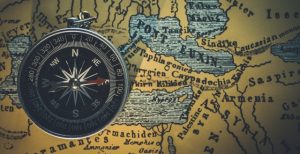
The business case provides the introduction to a potential project for many of those who are going to be involved. One of the favourite techniques of many business case writers is to describe the landscape of the project. Maps and landscapes, whether physical or metaphorical are a great medium for shared sense-making. They offer a helicopter view of the project and establish the boundaries; allow you to relate your project or elements of it to other projects or other organizations; and they give a sense of scale. The literary pedigree of landscapes goes right back to the earliest storytelling but you only have to think of Gulliver’s Travels to get an immediate sense of just what a rich medium they are for communicating meaning.
 The user case – communicating development and improvement
The user case, particularly for IT-related projects often refers directly to the ‘customer journey’ and in doing so references – the Hero’s Journey; a concept that can be traced back to classical literature (Homer’s Odyssey, the Labours of Hercules) and that has permeated literature ever since and become a staple of more recent media, such as film. The ‘journey’ metaphor references a process of enlightenment as a result of a series of experiences which the hero (or the customer) undergoes. Implicit in the process are that the customer changes their behaviour and in doing so, the metaphor implies they somehow become a better person.
 Communicating risk – cautionary tales to encourage action (or inaction!)
Whilst risk may often seem to be dry and scientific, particularly at the quantitative end of the process, risk communication is pure story-telling and draws on a long tradition of cautionary tales to put the fear of God into the subjects at whom the tales are directed. Stories of ‘what will happen if’ … or ‘anecdotes from past projects when disaster struck’, all engage the emotions of the listener far more than they do his or her intellect. For literary examples think of Hilaire Belloc’s story of Jim, who ran away from his nurse and was eaten by a lion or take a look at Bruno Bettelheim’s quite brilliant book, The Uses of Enchantment.
 Lessons learned – communicating triumph over adversity
Lessons learned, so much a staple of the knowledge process of most large processes – and their adult equivalent – Learning Legacies, are most obviously stories communicating success in the face of challenge, creativity in the face of problems. Encouraging the readers not simply to ‘learn the lesson’ but to be the heroes of the story, in just the same way as the legends of every culture showcase champions who triumph over adversity. By purloining the skills of these ancient storytellers, the modern learning legacy authors inadvertently imbue their work with the value of success in the face of difficulty that is so much a part of the ancient myths. Take a look at this example which relates the story of the Passover to the concept of resilience,
 Professional profiles – stories to communicate values and virtues
Increasingly YouTube, Vimeo, LinkedIn and other professional profiles, are the medium we use to communicate the values and the virtues of everyone in the project team from the leader downwards and they reflect the importance that human values such as compassion and empathy play alongside the technical and business skills associated with projects. These are the skills we use to build trust, to inspire confidence and suggest empathy and approachability. Organizations of all kinds regularly interview their leaders on video or invite them to tell their stories as after dinner speakers; to build the reputation of their top people and use their stories to encourage others to emulate their achievements.
In praise of storytelling
I hope the original two references and the subsequent examples may encourage you to think about the nature and value of storytelling. Used appropriately, it is brilliant medium for communicating quests; those most heroic of projects (think of the Vaccines Taskforces around the world or the response to Cumbria’s Storm Desmond), where the shared vision and authority of the outcome can allow you to step outside of traditional governance and project processes in the aim of speed. Storytelling is a great way for generating shared understanding; allowing you to communicate otherwise complex and technical concepts to a lay audience. It is a great way for building culture, sharing and championing behaviours and human values. And ultimately, stories remind us of the purpose of major projects: to enable us to develop, improve and better ourselves and our societies in the same way as the heroes undergoing their journeys.
Think about the storytellers in your organization: the people who: prepare the bids; put together the business cases; report on the journey and progress towards the destination; who communicate the risk and uncertainty; those who share the lessons and the legacy of what you are doing; and all those professionals who, alongside their day job, take time to weave and share stories about what they and you are doing via YouTube, Instagram, TikTok, LinkedIn, Facebook and Twitter. There are a lot more of them than you may have thought and maybe it’s time to add ‘storyteller’ to their job description and to find ways to help them develop their narrative skills?