


Published
 Has it ever occurred to you just how many companies do not acknowledge that they even have complex questions they need to ask themselves? They will confirm other organisations, of course, face complex questions, but they themselves never do. This is probably because of our tendency to give responsibility for solving each problem to one person, and Hey Presto! the complexity vanishes – as the problem has been reduced and framed within the specialization of the person now responsible for providing an answer. Complexity is a word you do not use to describe your own issues and problems, firstly because it means someone’s lost control (and how could that be you), and secondly, it means the problem is owned by more than one person – which again sounds as if you do not know what to do. Consequently, we avoid the ’C’ word, as altogether unhelpful.
Of course, there are some issues that come under the direct purview of the CEO, hence the German expression ’Chefsache’. That does not mean that these issues are necessarily complex, as he or she can always make a decision (even if it is a short-sighted one, enabling a temporary solution or a sense that the issues has been contained or, at the very least, addressed). However, if an issue is owned by multiple decisionmakers within a group, it means they all need to work together to fix the problem – then, yes, complexity arises. But in such cases, more often than not, politics kick in, preventing a call to action for collective problem solving and the application of the wisdom of crowds. Which means that if you call an issue a complex problem, it simply implies it requires a decision above your pay grade; needing the most senior chief to deal with it, as only this person is deemed capable of making a decision.
Yet if we agree with Matthew Syed’s explanation of the value of Rebel Thinkers: that they bring together their diverse perspectives and insights, and offer a collective mind to solve complex issues and make sensible decisions; why is it that we consistently fail to use them?
The book Rebel Ideas teaches us that a diverse group of people working together tends to solve complex problems better than the most skilled specialist in the field can ever do. But they are not appreciated for their capability. A rebel thinker is someone you invite to go and help other people to solve their issues. In our own organisation, they threaten the perfectly consistent and well-established solutions we already know and love. Which means that Rebels need to cloak their rebellion in order to make themselves heard.
I came up with the concept of a think-tank to reframe a group of rebels as solution architects for complex questions in large companies. The term is merely a promise of intelligence, but it sounds too tempting to ignore. The ‘think-tank’ gives status to anyone senior enough to be served by it and status to its members as only the smartest will be invited in for a swim.
We often highlight psychological safety as a pre-requisite to innovation; an environment within which the senior management team feel comfortable accepting, sometimes unusual, advice from unexpected quarters, without fear of being labelled irresponsible or being accused of shirking their role. A culture within which employees feel able to float irreverent or even contrary ideas and opinions, without fear of blighting their future career prospects, or worse.
Therefore, I invite everyone to join the Major Project Associations’ think tank and face the complex issues of our sector. Your next step is to spot them, share and make sense of them!
About the author
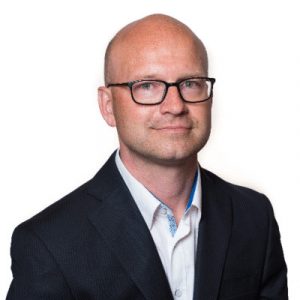 Martien Lathouwers, 49, married for 7 years and father of Esther, is a strategic thinker, delivering decision support for project managers and leaders. His main focus is on risk and opportunities in large infrastructure projects. He has worked at Arcadis for the past 22 years in the most diverse set of projects the company has to offer; from railway simulation and safety risk analysis, moving on to flood defences, dike and water-drainage projects, drinking water and sewage facilities, nature and water quality projects, scheduling, high voltage power lines for the wind at sea developments, highways, highspeed rail operation, traffic control, tunnel management, bridge and sluice renovation and maintenance, airport extension development, riverbed widening and ERTMS railway operation in rolling stock. Proudly one of the few who have seen the broad spectrum of Arcadis projects in all their rich diversity from close to.
2022’s Corporate Social Responsibility (CSR) person-of-the-year, board member for the Personnel Association, active union representative and Workers Council member, focussing on social and HR issues. On top of all this, Martien has been a Supervisory Board member for a commercial debt reduction company (Modus Vivendi) for 17 years; Secretary of an NGO dedicated to community service and neighbourhood care via our all-is-for-free shop and a pluck-your-pick garden (Limoenz.nl). And, no surprises here, orchid lover and food creator with a food technology background, an MBA in Marketing, and a MA in Logistics Management.