Published

Imagine you are preparing for your first ever sky-dive. How does it feel? I am guessing that you may be feeling nauseous, scared, weak-kneed and just as importantly, you find you can’t think about anything apart from the open aircraft door, six feet away.
The emotions associated with this event, the physical response and the mental shut-down are all similar to what many people experience when faced with news of a major change. And this is often only made worse by well-meaning managers, anxious to be up-front with staff, who explain that the change will be challenging and may be painful.
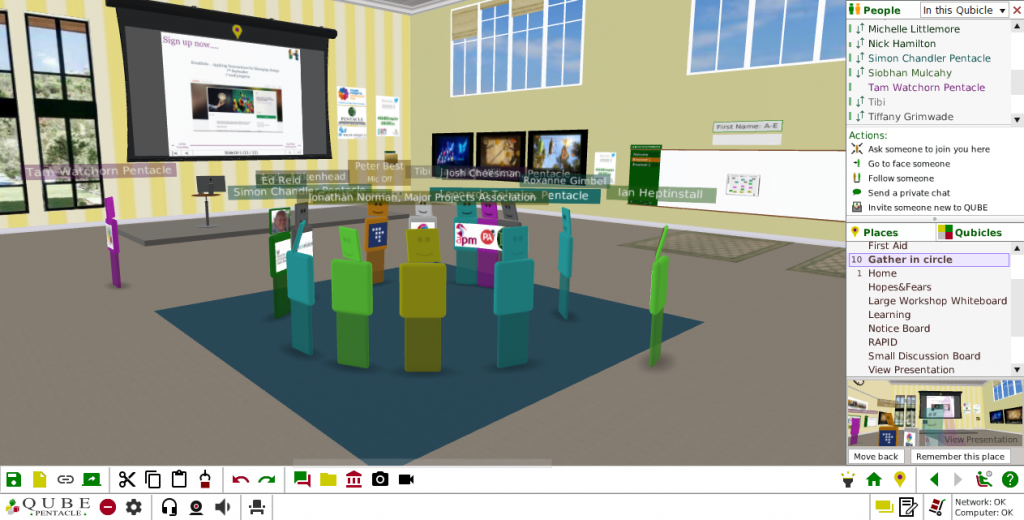
This was the scenario that Tibisay Vera and Tammy Watchorn presented during our recent QUBE@Work session on The Neuroscience of Managing Change.
 Because the session was running in the immersive, 3D world, called QUBE, the good news is that we were starting with a psychologically safe environment. In the warm up exercises at the start of the session, we made sure that everyone was comfortable moving around the workshop space (the QUBICLE), we’d shared our hopes and fears for the session and we’d established a way of working together that was completely inclusive.
In that context everyone was happy to share their emotional and physical response to this perceived threat and to compare those with our response to the anticipation of and then the experience of a holiday.
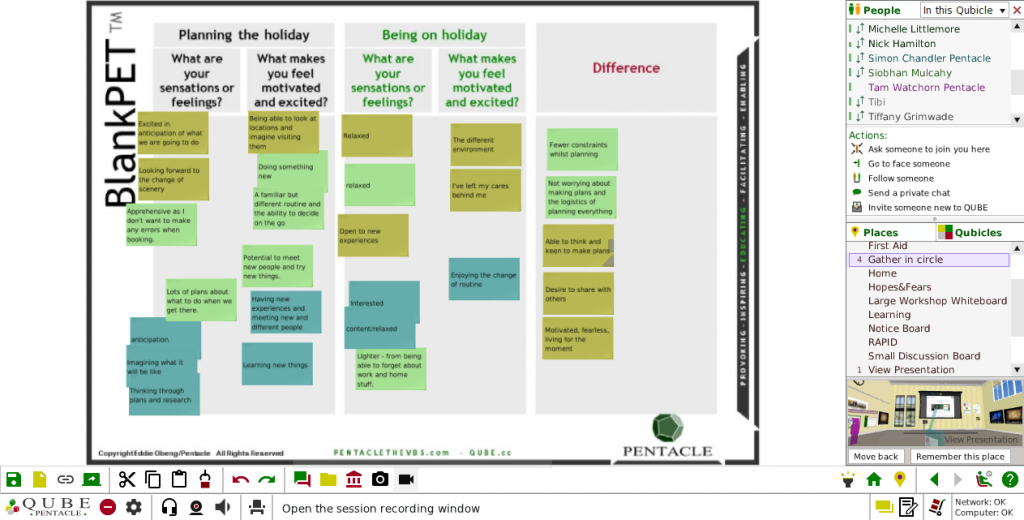
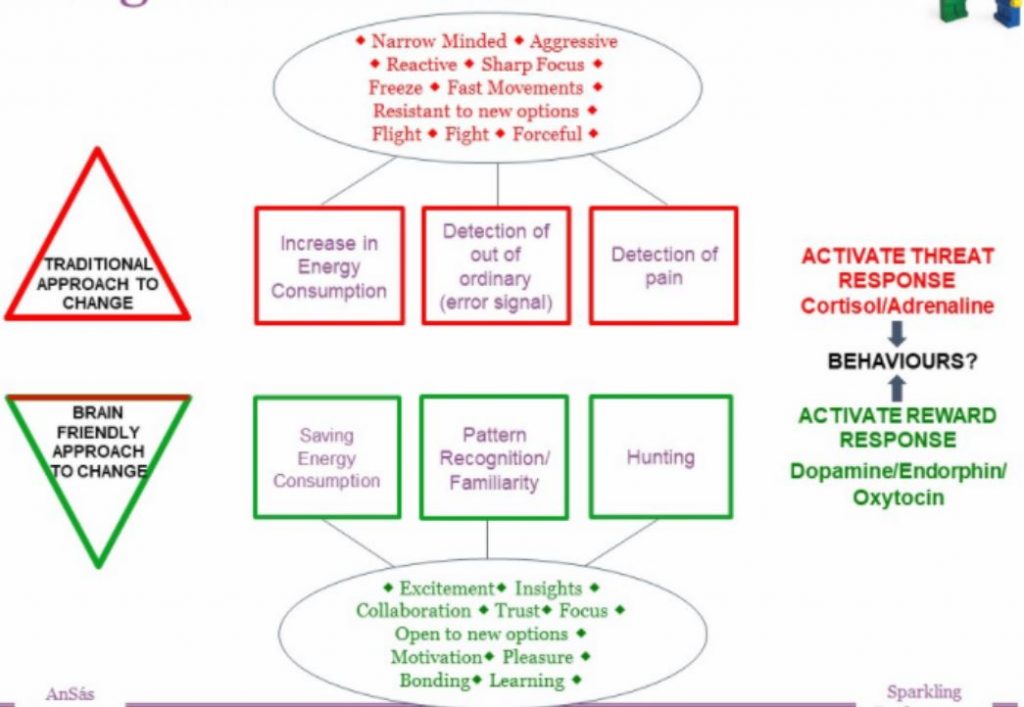
Thinking about those two different experiences and their associated emotions provides the catalyst for brain-friendly change; ways to engage people that avoid draining their energy, provide them with stories or patterns which are familiar rather than alien and creating opportunities for them to hunt (to research, co-design, share).
In major project terms, brain-friendly change might involve:
- using stories and finding simpler ways to communicate information to the long, detailed, technical reports that require huge amounts of brain-power to process
- developing a common-language that enables the functional specialists such as schedulers, risk managers or engineers to communicate with everyone across the project in a way that is intuitive and easily understood
- chunking the change to create a sense of progress and early success and prevent change fatigue
- understanding and working with the organizational heuristics, the rules of thumb that underpin an organization’s culture
- creating a place of psychological safety (like QUBE) in which individuals can work together, can question and can experience the change as it happens
A ninety minute QUBE@Work session is never going to change the world but offers plenty of signposting for how you could achieve that. In this session 18 delegates of all ages and varied roles from across industry, the health sector, consultancy and government came together to learn socially and the ‘group favourite’ of the reflections in the final learn by sharing was “Surprise at how quickly people from different organizations can start to collaborate.”
QUBE@Work takes place on the third Thursday of each ‘even’ month (February, April, June, August, October and December). Details of the next session (Thursday 19th August) on how to switch consultation on big issues (such as climate change and sustainability) from face-to-face to virtual will be posted shortly.