


Published
In this blog, Gianina Caballero, strategic Programme Leader specialising in transformation, reflects on the success of the implementation of Building Information Modelling (BIM) in Peru and shares the valuable lessons from this successful project which industries beyond construction can learn from.
A vision for change
Throughout my career, I have led complex programmes where success is not just about delivering outputs but about shaping long-term impact. One of the most significant projects I have been involved in was the implementation of Building Information Modelling (BIM) in Peru. At its core, this was not just a digital initiative — it was a strategic transformation effort that reshaped the way infrastructure projects are delivered, creating a framework that industries beyond construction can learn from.
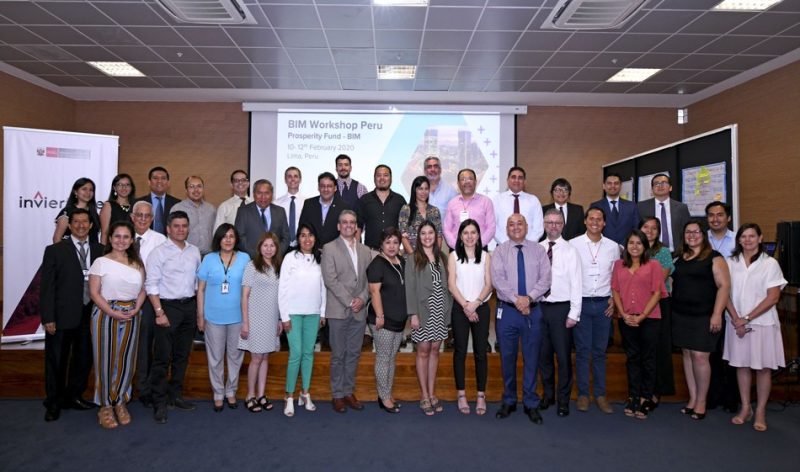
The Challenge: Closing a $160B infrastructure gap
Peru, one of Latin America’s fastest-growing economies, faced a stark reality: a $160 billion infrastructure deficit that threatened to stall progress. Major projects suffered from chronic delays, cost overruns, and bureaucratic inefficiencies, leaving critical infrastructure incomplete and funds underutilised.
Beyond infrastructure, these challenges — lack of transparency, fragmented coordination, and misaligned incentives — also hindered banking, financial markets, and real estate, where decision-making remained slow and risk-averse. The question was clear:
How do we break free from these constraints and create a model that delivers real, long-term value?
Incremental fixes were no longer an option. A bold, systemic shift was needed — one that moved beyond traditional project management towards a data-driven, collaborative model capable of ensuring efficiency, accountability, and measurable impact.
The Solution: A strategic approach to digital transformation
Rather than introducing technology in isolation, we focused on embedding a fundamental shift in mindset across government agencies, industry leaders, and financial stakeholders. As part of this transformation, my role was to coordinate efforts, ensure alignment among key stakeholders, and oversee the implementation process to maintain strategic focus and coherence.
As with any major transformation, resistance was inevitable. Some stakeholders questioned BIM’s complexity and return on investment, hesitant to disrupt long-established processes. The key was not to enforce adoption, but to demonstrate its impact. By showcasing proven international successes — where BIM had enhanced efficiency, governance, and risk management — we provided undeniable evidence of its value.
The breakthrough came from influencing the right voices. Large-scale transformation can seem daunting, but real change often begins with a small but influential group of decision-makers. In my role, I facilitated engagement with high-level officials, helping to align BIM’s implementation with national infrastructure priorities and positioning it as a catalyst for long-term reform.
With top-down support, momentum grew. What began as a sceptical concept evolved into a national strategy, redefining the standard for infrastructure planning and delivery.
Key success factors included:
• Visionary leadership & stakeholder engagement
Through cross-government collaboration, we aligned ministries, regulators, and private sector partners, ensuring collective buy-in — a strategy equally critical in financial markets where governance structures drive stability.
• Global partnerships for knowledge transfer
Partnering with the Centre for Digital Built Britain (CDBB) enabled Peru to integrate international best practices — just as global financial institutions and stock exchanges leverage partnerships to maintain competitiveness.
• Data-Driven decision making
By embedding BIM methodologies into Peru’s National Infrastructure Plan, we created a framework that enhanced transparency, reduced project risks, and improved long-term predictability.
The Impact: Strengthening bilateral relations and setting a blueprint for broader industries
The success of this initiative extended beyond infrastructure transformation — it also deepened bilateral cooperation between Peru and the UK, leading to formalised collaboration through MoUs (Memorandums of Understanding) and Government-to-Government (G2G) agreements. These partnerships reinforced long-term strategic ties, facilitating continued knowledge transfer, investment opportunities, and joint initiatives that will shape Peru’s infrastructure landscape for years to come.
A key milestone of this impact was the Peruvian government’s issuance of a national decree, formally approving the progressive incorporation of BIM in public investment projects. This marked a significant policy shift, embedding digital transformation into the country’s governance framework and securing BIM’s role in future infrastructure planning.
Beyond its national impact, BIM’s implementation became a model for efficiency, transparency, and strategic execution, demonstrating how structured collaboration and data-driven methodologies can drive progress. The same principles — governance, multi-stakeholder alignment, and risk mitigation — are critical across industries looking to enhance efficiency and long-term value creation.
Key impact areas include:
• Bridging the infrastructure gap: A key step towards the country’s modernisation and the optimisation of public projects.
• Better alignment with international standards: Facilitating foreign investment and ensuring long-term sustainability.
• Positive environmental impact (emissions reduction): Adoption of more efficient and sustainable methodologies.
• Increased stakeholder confidence: Enhancing predictability and credibility within the sector.
• Greater transparency in project execution: Fostering a culture of clear and effective governance.
• Stronger governance structures: Providing a replicable model for sectors that require multi-stakeholder alignment.
Lessons Learned: Transferable strategies for business transformation
Reflecting on this success, several core principles emerge — ones I have applied across industries and that remain fundamental to navigating transformation:
1. Leadership is the catalyst for change: Whether in sustainable finance or AI-driven risk assessment, transformation succeeds when leadership unites stakeholders under a shared vision.
2. Digital transformation is about people, not just technology: Adoption happens when teams are empowered, processes optimised, and change embedded at every level.
3. Transparency and accountability drive progress: Strong governance and data-driven insights enable organisations to make informed decisions, mitigate risks, and enhance performance.
4. Strategic partnerships accelerate impact: The right collaborations foster knowledge transfer, scalability, and long-term success — as seen in Peru’s engagement with CDBB, which demonstrated how global cooperation drives transformation.
5. Change is an iterative process, not a one-time event: The adoption of BIM was a gradual process, requiring capacity-building, regulatory adaptation, and continuous refinement. By integrating feedback loops, the strategy remained flexible, evolving with stakeholder needs and emerging challenges.
Conclusion
The BIM success story in Peru demonstrates how strategy, leadership, and collaboration can drive large-scale transformation. What began as an infrastructure initiative evolved into a model for change, strengthening governance, fostering international cooperation, and paving the way for future investments.
The same principles — stakeholder alignment, data-driven decision-making, and sustainable change — apply across industries, from real estate to financial services. True transformation is not about isolated efforts, but about strategic vision, collaborative leadership, and continuous innovation.
A Personal reflection
Coordinating and supervising this programme was more than managing processes — it was about witnessing the power of transformation at a national level. Seeing a strategic vision materialise into tangible impact reaffirmed my belief that real change happens when execution meets intent, when leadership is decisive, and when collaboration is at the core.
Ultimately, transformation is not just about systems and processes — it’s about the lasting value we create. And as I look ahead, I remain dedicated to driving strategic change that leaves a lasting impact.

Connect with Gianina on LinkedIn