


Published
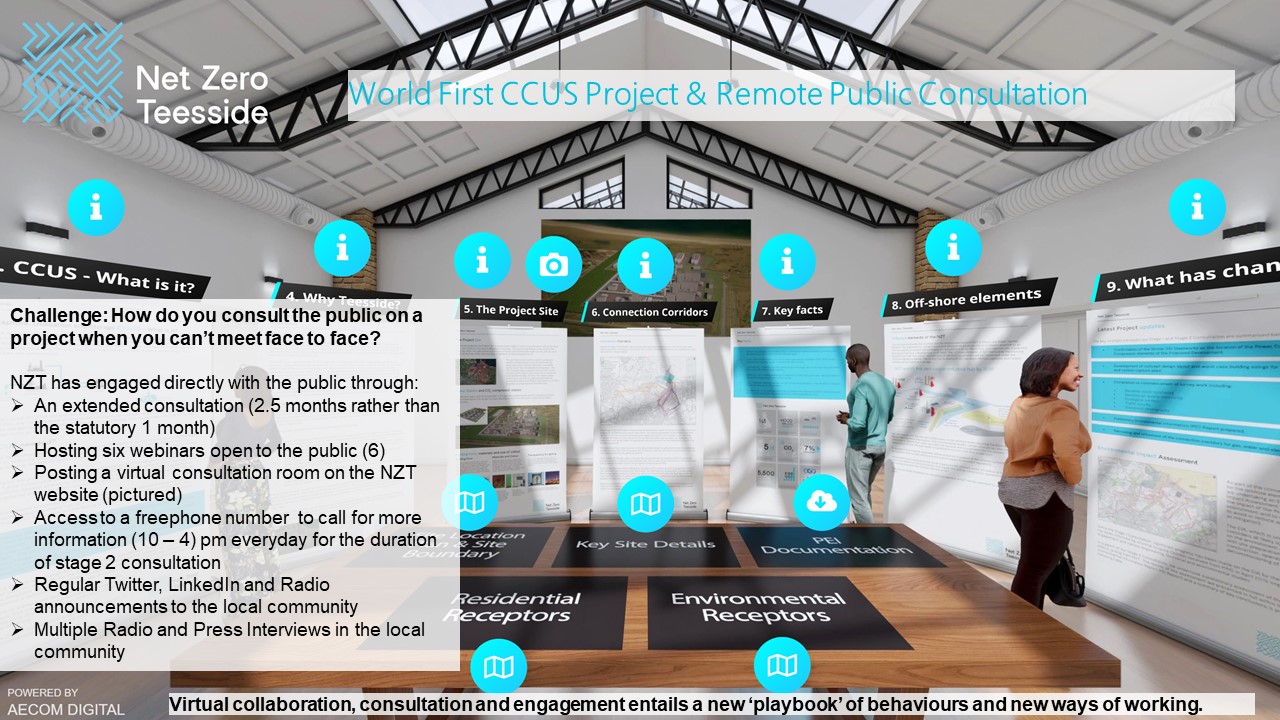
Our most recent QUBE@Work workshop on 19th August tackled the question of stakeholder engagement and virtual consultation. We opened with a presentation from Sarah Wilford, CEnv, GCD/NE HSE&C Manager at BP who talked us through how they managed the virtual consultation for the Net Zero Teesside project: the challenges and the opportunities of being forced to run a remote public consultation; how they approached the statutory requirements of the consultation process and what they have learned from the experience.
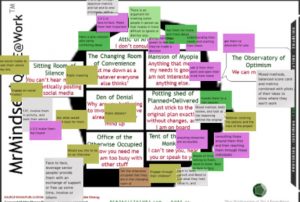
We then ran an exercise in small groups called ‘Mr Mindset’ to gather and share ideas on how best to engage and consult with different groups of stakeholders, from those whose mindset put them in everything from the ‘Attic of Arrogance’ to the ‘Observatory of Optimism’.
And we finished with something of a high-risk activity, one that seemed most appropriately suited to a workshop on virtual consultation. We used the Eureka Blog PET (performance enhancement tool – essentially a facilitation device) to solicit the elements of a spontaneous, collaborative blog post from the delegates, around the theme of successful virtual consultation. What follows is the output from those contributions, woven together to complete the blog.
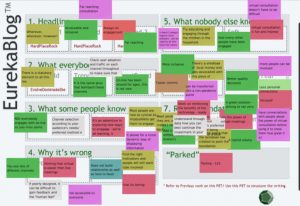
Eureka Blog on Successful Virtual Consultation
Online has been around for ages, this is not new!
There shouldn’t be anything new in either consultation or the internet, both have been around for ages. The statutory framework that underpins the consultation process may not have anticipated doing the process virtually but Covid 19 has enabled or required all of us to adopt new approaches to our work. Since we can measure much of what we do online, virtual consultation provides us with a set of metrics to check how far we are reaching our stakeholders through each of our selected channels.
It is an adventure in exploring new ways to engage
For some, the virtual environment offers a space to experiment, recognising that consultation is a messy process and the media, whilst not perfect provide a way to learn and improve. For others the virtual space doesn’t change the basic fact that many citizens are now cynical and disengaged, which makes consultation difficult, however you do it. On the plus side, meeting people through their chosen medium (for example, social media, radio or talk back forum) is an obvious stepping stone to engaging them and careful channel selection on that basis is a surefire key to success.
Not accessible to everyone
Those who are wary of this medium may argue that the virtual world is not accessible to everyone, that you may miss some important stakeholder groups, that it can never build relationships as effectively as face-to-face consultation or, indeed that if it poorly design virtual consultation can make it harder to gain feedback or provide ‘the human touch’ that is so essential to engagement. And it would be a mistake to imagine that virtual consultation is somehow easier or more exciting than live meetings. The opposite may be the case.
It really doesn’t have to be difficult
On the other hand, using multiple channels enables far greater reach and can create an experience that is intense and fun both for those doing the consulting and those consulted. The flexibility and speed of the process encourages you to test and learn, displaying information in ways that are dynamic, that adapt to the needs of individual users and may be changed or updated on the basis of feedback or as your understanding and that of your stakeholders grows. As with traditional consultation, if you can find the right motivators and people will want to be involved. It really doesn’t have to be difficult!
Using relatively simple software you can encourage the younger generation and those who warm to the media early in the process to engage their older or less adventurous peers in the process.
The speed of the virtual process, its flexibility and its reach, and the variety and range of feedback all point to a process that may lead to a better decision-making process than traditional consultation.
Use the space the lockdown has created to push the boundaries
For those who wish to introduce virtual consultation into their stakeholder engagement toolset, use the space the lockdown has created to push the boundaries. Make sure that you capture and understand the data to direct your investment in different channels and work on reinforcing the benefits of this technology which provides stakeholders with ready access to up to date information, reference materials and the ability to chat, comment and ask questions.
This is definitely a technology that can be transferred to the non-pandemic world if you are careful to have conversations about its power before you use it in anger.
Add it to your portfolio alongside traditional techniques to build a hybrid would suggest an approach that allows the best of both worlds and, in the context of CoP26 and the Climate Emergency, it’s not just Net Zero Teesside (the UK’s first decarbonised industrial structure and the subject of the presentation that Sarah Wilford gave us at the start of the QUBE session) but also virtual consultation, that can wear it’s environmental colours on its sleeve; replacing physical documents, journeys and spaces with the virtual.
Created collaboratively using the Eureka blog PET by the delegates of QUBE@Work