


Do we have the Capability we need for the new types of Major Projects in the pipeline?
The demand for major projects is growing rapidly. Over the next 5 years, a significant uptick in activity is expected in many sectors including civil nuclear, energy distribution, housing retrofit, water supply and renewable power.
Against that backdrop the major projects community needs to be proactive and identify the technical, functional and leadership capacity & capability it needs to deliver successfully.
In this seminar we will explore both the scale of demand for people at all levels to work on major projects, and the new skills and capabilities that we will need to be able to deploy. Attendees will learn more about how this challenge is playing out across different sectors and explore common opportunities and challenges such as climate change, AI, global competition, leadership and the ever longer careers of project professionals.
Chaired by Dr Michele Dix CBE and David Goldstone CBE, other speakers include former Crossrail and future HS2 CEO Mark Wild, Keltbray's Group Sustainability Director Holly Price, and House of Commons Regeneration and Renewal Programme Commercial Director Andy Haynes. The seminar will be highly interactive, offering plenty of opportunities to explore the challenges and solutions, including a workshop session led by the Association's Early Career Network.
The event registration is now closed.
Programme
Wednesday 6th November 2024

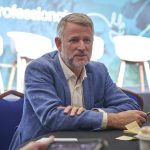
Andy is a respected author, having worked with HM Treasury, Cabinet Office, the Association for Project Management (APM) and Axelos to develop best practice guidance on their behalf. Publications include PRINCE2, P3M3, Routemap and the Governance of Co-Owned Projects. He was cited in the Sunday Telegraph’s business supplement as one of the most influential people in project management. He is the Chair of the APM’s Governance Special Interest Group, the Chair of the IPA’s independent project advisory group for the Project Initiation Routemap and is the engagement workstream lead for the Project Data Analytics Task Force.
Andy is a collaborative and inclusive senior leader with a track record of building high-performing teams both within his organisation, across partnerships and with voluntary groups.
Outside of work Andy spends his time mountain biking or helping out Willaston FC (a community football club) as treasurer and manager of the Under 14s team.


Michèle became the Managing Director for Planning in 2007 and led TfL’s strategic thinking on the future transport needs of London, testing and challenging policies and providing clear direction on appropriate transport solutions for the future. She was responsible for the 2010 Mayor’s Transport Strategy and transport requirements for the Mayor’s 2050 Infrastructure Plan; coordinating the implementation of local plans and borough partnerships; and developing major schemes including the Central London Ultra Low Emission Zone (ULEZ), Northern Line Extension, the Barking Riverside Extension, the Silvertown Tunnel, Bakerloo Line Extension and Crossrail 2.
Michèle became the Managing Director of Crossrail 2 in 2015, further developing the scheme design to gain funding and powers for it, working closely with Network Rail Ltd and Department for Transport (as joint sponsors). Further to the COVID pandemic’s impact on TfL’s finances, the scheme is now paused, but all work has been digitised and is ready to be resumed when funding allows for it.
Michèle is now retired from TfL and from her role as a Trustee of the London Transport Museum and as a Vice President of UITP, an international association that promotes public transport research and best practice world-wide. She remains a Visiting Professor for University College London and is a Non-Executive Director for the Major Projects Association, the Houses of Parliament Restoration and Renewal Programme and Crossrail International. Michèle was awarded a CBE in 2015 for her services to transport.


David was previously the Chief Operating Officer of the Ministry of Defence (MOD), where he led the Department’s complex multi-billion transformation programme, overhauled the ‘Defence Operating Model’ including the role of Head Office, represented the Department on the Boards of the military commands and was sponsor of 12 arm’s length bodies.
David had a leading role in both the planning for, and the regeneration legacy from, the 2012 Olympic and Paralympic Games. As the Chief Executive of the London Legacy Development Corporation, David was responsible for the delivery of the East London regeneration legacy, including the development of Queen Elizabeth Olympic Park and the surrounding areas. This involved creating thousands of new homes, new centres of employment and technological innovation, new visitor and sporting attractions, and developing a major new cultural and educational district in East London. David had previously spent over five years overseeing the funding and programme delivery of the 2012 Games investment on the Olympic Park, including being responsible for the Government’s £9.3bn budget for the 2012 Games, and for political and public reporting of progress of delivery to budget; and was then Transport for London’s Chief Finance Officer.
Previously, David spent 12 years in the delivery of locally based investment programmes for Government, establishing the delivery and commercial structures for the Building Schools for the Future school’s investment programme and the NHS LIFT primary healthcare programme, and played a prominent role in establishing the structure by which Local Authorities and schools could deliver private finance projects.
David trained as a CIPFA accountant whilst at the Audit Commission (1986-1989) before moving to Price Waterhouse (1989-1997). He had previously spent two years as a secondary school teacher.


Opportunity for Q&A, facilitated by event chair's.



In 2023, Laura was appointed our Head of Project Management Profession.
The Head of Profession role is to provide our c200 Project Managers with access to the most up to date industry information, guidance, best practice and training. This allows our Project Managers to deliver great projects for our clients with quality at the forefront of what we do as an organisation; whilst having access to training opportunities to enrich their professional and personal development.
In her role, Laura has taken a lead on developing our Project Academy. This is a programme that enables our organisation, and our external clients, to improve project performance. It provides internal training to develop competencies, project management courses to support career development, and leadership and team development training. Working with our colleagues in Norway, Laura has been developing the programme for the UK and making sure that it aligns with UK standards, including the APM competencies. This tool will be available for Tetra Tech colleagues, client teams, and project teams and supports a range of learning styles and allows colleagues to go at their own speed to make sure that it is an inclusive tool for all to support their development.
As head of profession, Laura is always working to continually develop Tetra Tech’s capability offering whilst bolstering our internal and external skills development. This is the key enabler to deliver a high-quality service for our clients.


Maddie has a strong background in the sustainability field, primarily through her studies at university where she earned a BSc in Physical Geography. Her degree at the University of Leeds focused on environmental data analysis, ecosystem regeneration and environmental monitoring. Maddie has been able to put that knowledge into practice over the last year, whilst also developing her stakeholder management, baseline development, and supply chain management skills.
In addition to her commission work, Maddie also leads the Manchester office’s Early Careers Network, where she has been involved in organising a number of initiatives aimed at connecting our colleagues and improving their wellbeing. This year, Maddie is also aiming to become a Practitioner with IEMA to further her professional development.


Prior to working at Turner & Townsend, Kobi completed a bachelor’s degree in Chemistry, focused on both Medicinal & Inorganic Chemistry. While not directly related to the construction industry, his degree provided a compound understanding of technical analysis, problem solving & planning that has supported his development throughout his time at Turner & Townsend.
Alongside his other commitments, Kobi previously lead the Manchester early careers network, while also supporting in Turner & Townsend’s wider people culture to support our colleagues in being inclusive, connected & engaged. This year, Kobi is focused on supporting Business Generation in region, while also taking on a National Connect Role to further support connecting colleagues throughout our industry.


As CEO of Crossrail (2018-2022) in London, a £20bn programme delivering one of the world’s most advanced high-frequency passenger rail services, he implemented a rescue and recovery of the programme following earlier cost and schedule delays in 2018. This included rebuilding the organisation, completing construction of the programme and the integration into one of the most successful and celebrated new operating railways in the world – now known as the Elizabeth line.
In addition to driving organisational change and delivering major schemes to successful completion, Mark puts safety and sustainability at the heart of his ethos and is also passionate about helping to develop a new and diverse generation of engineers to lead the industry.
Mark awaits the start of his next role as Chief Executive Officer of HS2 Limited, leading one of the largest infrastructure programmes in the UK - Britain’s newest, high speed railway stretching over 140 miles between London and Birmingham and employing over 30,000 people.
Mark will join HS2 Ltd from SGN, one of the UK’s largest gas distribution networks, servicing 7 million customers in Scotland, Southern England and Northern Ireland.
Mark grew up in Durham in the North East of England. He is a Fellow of the Royal Academy of Engineering, has a 1st class engineering degree and an MBA from Leeds University.
Andy is a respected author, having worked with HM Treasury, Cabinet Office, the Association for Project Management (APM) and Axelos to develop best practice guidance on their behalf. Publications include PRINCE2, P3M3, Routemap and the Governance of Co-Owned Projects. He was cited in the Sunday Telegraph’s business supplement as one of the most influential people in project management. He is the Chair of the APM’s Governance Special Interest Group, the Chair of the IPA’s independent project advisory group for the Project Initiation Routemap and is the engagement workstream lead for the Project Data Analytics Task Force.
Andy is a collaborative and inclusive senior leader with a track record of building high-performing teams both within his organisation, across partnerships and with voluntary groups.
Outside of work Andy spends his time mountain biking or helping out Willaston FC (a community football club) as treasurer and manager of the Under 14s team.
Opportunity for Q&A, facilitated by event chair's.
Michèle became the Managing Director for Planning in 2007 and led TfL’s strategic thinking on the future transport needs of London, testing and challenging policies and providing clear direction on appropriate transport solutions for the future. She was responsible for the 2010 Mayor’s Transport Strategy and transport requirements for the Mayor’s 2050 Infrastructure Plan; coordinating the implementation of local plans and borough partnerships; and developing major schemes including the Central London Ultra Low Emission Zone (ULEZ), Northern Line Extension, the Barking Riverside Extension, the Silvertown Tunnel, Bakerloo Line Extension and Crossrail 2.
Michèle became the Managing Director of Crossrail 2 in 2015, further developing the scheme design to gain funding and powers for it, working closely with Network Rail Ltd and Department for Transport (as joint sponsors). Further to the COVID pandemic’s impact on TfL’s finances, the scheme is now paused, but all work has been digitised and is ready to be resumed when funding allows for it.
Michèle is now retired from TfL and from her role as a Trustee of the London Transport Museum and as a Vice President of UITP, an international association that promotes public transport research and best practice world-wide. She remains a Visiting Professor for University College London and is a Non-Executive Director for the Major Projects Association, the Houses of Parliament Restoration and Renewal Programme and Crossrail International. Michèle was awarded a CBE in 2015 for her services to transport.
David was previously the Chief Operating Officer of the Ministry of Defence (MOD), where he led the Department’s complex multi-billion transformation programme, overhauled the ‘Defence Operating Model’ including the role of Head Office, represented the Department on the Boards of the military commands and was sponsor of 12 arm’s length bodies.
David had a leading role in both the planning for, and the regeneration legacy from, the 2012 Olympic and Paralympic Games. As the Chief Executive of the London Legacy Development Corporation, David was responsible for the delivery of the East London regeneration legacy, including the development of Queen Elizabeth Olympic Park and the surrounding areas. This involved creating thousands of new homes, new centres of employment and technological innovation, new visitor and sporting attractions, and developing a major new cultural and educational district in East London. David had previously spent over five years overseeing the funding and programme delivery of the 2012 Games investment on the Olympic Park, including being responsible for the Government’s £9.3bn budget for the 2012 Games, and for political and public reporting of progress of delivery to budget; and was then Transport for London’s Chief Finance Officer.
Previously, David spent 12 years in the delivery of locally based investment programmes for Government, establishing the delivery and commercial structures for the Building Schools for the Future school’s investment programme and the NHS LIFT primary healthcare programme, and played a prominent role in establishing the structure by which Local Authorities and schools could deliver private finance projects.
David trained as a CIPFA accountant whilst at the Audit Commission (1986-1989) before moving to Price Waterhouse (1989-1997). He had previously spent two years as a secondary school teacher.