


Annual Conference 2023 - In Pursuit of Outcomes: Foolhardy or Flippin’ Hard?
A quick scan of project management guidance, frameworks and methods will highlight the importance of 'outcomes'. Taking an outcomes-based approach features prominently in every revision of Managing Successful Programmes (MSP) since it was first published in 1999 and more recently in the Construction Playbook, the Value-Toolkit, Project 13, the IPA Routemap, the Government Functional Standard for Project Delivery and HMT Greenbook... to name a few.
The UK is not alone in pursuing an outcomes-based approach. The former UN Secretary-General Kofi Annan proposed in 1997 for the UN to place greater emphasis on results in its planning, budgeting and reporting: "with the aim of shifting the United Nations programme budget from a system of input accounting to results-based accountability". This led to the launch of their Results Based Management (RBM) framework 1999.
Although not new, the desire to move to outcome-based projects is seductive given that delivering outcomes is the very reason for projects and programmes. But in practice, taking an outcome-based approach across the full project lifecycle and through the multi-organisation relationships has proven difficult. We often revert to specification-based or output-based approaches and methods. Indeed, a 2007 review of the UN's RBM framework concluded that despite considerable investment in RBM by UNDP that they were still "largely managing for outputs rather than outcomes and that the linkages between outputs and intended outcomes are not clearly articulated". The UNDP experience is not an isolated one and despite a general consensus that taking an outcome-based approach is desirable, projects remain stubbornly output-based 'in practice'.
Join us at our 2023 Annual Conference where we will tackle this challenge and explore ways of overcoming the 'as desired' vs 'in practice' gap. We will ask whether an outcome-based approach can ever be realised in practice. We will consider whether we should target its application to specific parts of the project lifecycle (e.g. scoping) or specific parts of the project organisation (e.g. the sponsor) or whether it needs to be an 'all in' approach for it to work. We will look at how legal and commercial factors affect the alignment of work to outputs to outcomes and their relationships to social value.
We will explore such issues and opportunities by hearing contrasting experiences from several case studies (that push boundaries) from Heathrow's third runway, the Lower Thames Crossing, the Atomic Energy Agency's STEP programme, the New Hospitals Programme and the East Bank Programme which is regenerating parts of East London around the Queen Elizabeth Olympic Park. As is customary at our conference we will seek practical conclusions that members can apply in their own organisation, such as how to better frame projects and set up their execution strategies using outcomes. Delegates will be invited to contribute, through a workshop, to the development of our 'outcomes in practice' report.
Please note, the date for the 2023 Annual Conference has shifted from 2-3 October to 9-10 October.
Due to limited availability, this event is open to Main Reps and/or nominated representatives only. Please email sascha.flint@majorprojects.org if you have any questions.
This event is not bookable online
Get in touch for more information regarding this event: mpa@majorprojects.org
Programme
Monday 9th


• Liontrust Asset Management
• The Coalition for Climate Resilient Investment (Co-Chair)
• The European Foundation
• Accounting for Sustainability


Stephen has more than 35 years of experience in social and economic infrastructure projects. Before joining the public sector in 2010 he was a Director of international property advisers DTZ specialising in complex development transactions in the fields of infrastructure privatisation, urban regeneration and Public Private Partnerships. He joined Partnerships UK in 2004, where he headed the major projects team and delivered the innovative MoDEL project for the MoD, structured the delivery agreements for Crossrail and chaired the Compliance and Oversight Group to assure the venues and infrastructure procurements for the London 2012 Olympics.
In 2010 Stephen joined Infrastructure UK (a unit of HM Treasury) as Head of Infrastructure Delivery. He was actively engaged in development of the UK’s first National Infrastructure Plan and delivery of key projects including Thames Tideway Tunnel, The Northern Line Extension to Battersea Power Station, Mersey Gateway Bridge, Hinkley Point C and HS2.
In his current role Stephen leads a team of Commercial Advisers. The Commercial Adviser Team includes people with deep professional knowledge and experience in specialist fields. They provide expert advice to HM Treasury, Cabinet Office and government Departments to improve the performance of project delivery in Infrastructure, Enterprise & Growth and Public & Security Services. Current IPA responsibilities include leadership of the Transforming Infrastructure Delivery programme, advice to the Palace of Westminster restoration and renewal project, Oxford - Cambridge corridor development, Building Safety programme, HS2 stations development and construction industry reform.


Richard is a proven commercial leader, having previously led Turner & Townsend’s +100 strong cost and commercial business unit at Heathrow Airport, and has also held roles as the Head of Cost & Controls, Head of Commercial Assurance and Head of Performance Assurance at Crossrail.
Richard is passionate about driving industry performance improvement. On 2018, he co-authored the Transport Infrastructure Efficiency Strategy and worked with the Construction Leadership Council on industry performance – benchmarking and improvement. He chaired the Project 13 ‘Future Leaders Group’ and sat on the Project 13 Executive Board and Infrastructure Client Group Management Board throughout 2018/19. Richard was also a co-author of the Programmes with Purpose report developed in partnership with the CBI, published in 2021.


Born on the Isle of Skye, he joined the Royal Navy in 1988. His early career was a mix of operational tours in seagoing submarines and shore-based roles in engineering support and procurement. His later career focussed on complex programme leadership, coupled with a stint in strategy and performance management on behalf of the Defence Board. Over recent years he was the MOD Programme Director for the Type 26 Global Combat Ship and Offshore Patrol Vessel projects, led work on the National Shipbuilding Strategy and, as Director Submarines Acquisition in the rank of Rear Admiral, was Programme Director for the Astute Class submarine build programme, the SSN Replacement design programme and the Dreadnought Programme, the UK’s second largest major programme after HS2.
Paul holds a BEng and a MSc in Marine Engineering, a post-graduate Diploma in Nuclear Reactor Technology, an MBA and is also a graduate of the UK Government’s Major Projects Leadership Academy. He was made a Companion of the most honourable Order of the Bath in the 2019 New Year’s Honours. He is married to Gill and they have two grown up two children. The main family passion is sailing, and he is also a keen recreational skier and plays the bagpipes.


She is also the SRO for East Bank, the new creative and education hub with Sadler’s Wells, UAL’s London College of Fashion, University College London, BBC and the Victoria and Albert Museum. This £1.1bn project will deliver 2,500 jobs, attract 1.5m additional visitors and generate £1.5bn of economic benefit to London and the UK. Rosanna has responsibility for the design, development, commercial negotiations and agreements with the market to deliver this programme


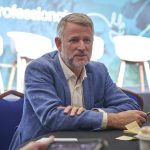
Andy is a respected author, having worked with HM Treasury, Cabinet Office, the Association for Project Management (APM) and Axelos to develop best practice guidance on their behalf. Publications include PRINCE2, P3M3, Routemap and the Governance of Co-Owned Projects. He was cited in the Sunday Telegraph’s business supplement as one of the most influential people in project management. He is the Chair of the APM’s Governance Special Interest Group, the Chair of the IPA’s independent project advisory group for the Project Initiation Routemap and is the engagement workstream lead for the Project Data Analytics Task Force.
Andy is a collaborative and inclusive senior leader with a track record of building high-performing teams both within his organisation, across partnerships and with voluntary groups.
Outside of work Andy spends his time mountain biking or helping out Willaston FC (a community football club) as treasurer and manager of the Under 14s team.