Published
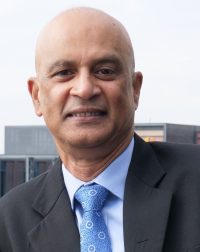
Himangshu Dey, Director of Global Sustainability at Fluor, a member organisation of the Major Projects Association, shares Fluor’s sustainability journey and net zero achievement.
About Fluor and Our Presence in the UK
Fluor is a global engineering, procurement and construction (EPC) services company headquartered in the United States with offices in more than 60 countries, including the UK. Fluor has deep technical and professional expertise spanning more than 110 years in the industry. We execute projects in the energy transition market: renewable fuels and chemicals; hydrogen; clean power and energy storage; battery value chain; and carbon reduction.
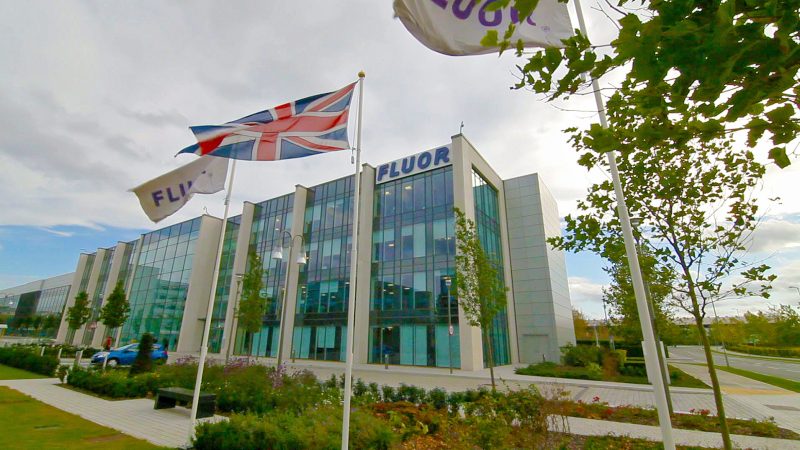
Fluor was established in the UK in 1957. Located in Farnborough, within the UK, our teams have led the execution of several major EPC projects in energy, infrastructure, advanced technologies, life sciences and other sectors. More recently, our Farnborough office has carried out design for world-scale carbon capture projects, design and execution of hydrogen firing conversion for industrial boilers, various studies for sustainable aviation fuels and biofuels, and design and execution of a lithium battery project.
As an example, our team is providing EPC services for Mitsubishi Chemical Group’s Puma Project in Saltend Chemicals Park, Hull, that will produce a high gas-barrier resin. The resin extends the flavor and quality of foods, resulting in reduced food waste. It is also certified as highly recyclable in combination with the client’s recycling compatibilizer.
Fluor’s Sustainability Mindset
Sustainability is integral to Fluor’s culture and operations. We help clients safeguard the environment, conserve energy, protect lives, strengthen the economies and social structures of communities where our employees work and live.
In 2006, Fluor started measuring our operational greenhouse gas (GHG) emissions, and in 2008, we began to voluntarily report our carbon footprint. Our offices and project teams around the globe implement sustainability initiatives, engaging with both internal and external stakeholders. We are collecting data for our operational emissions from more than 110 offices worldwide. This was made possible through the development of proprietary software developed by a group of Fluor’s sustainability professionals and IT engineers.
Our Net Zero 2023 Commitment
In 2021, Fluor committed to achieving net zero Scope 1 and Scope 2 operational GHG emissions by the end of 2023. This was a bold and challenging target, well ahead of most of our peers in the industry. It required commitment from everyone at Fluor. Many of our offices switched to renewable energy, electric fleet vehicles, solar power generation and LED lighting with sensors.
Our Farnborough office incorporates sustainable practices across the entire site. A waste-to-energy plant powers the campus, and LED lighting and rooftop solar panels reduce electricity consumption. Single-use plastic is not used. All campus waste is recycled, including food waste that is turned into pesticide-free fertilizer for local farming, so nothing goes to the landfill. The office’s waste management vehicles are carbon neutral, and the rest of the fleet runs on electricity.
“I’m proud of our UK employees’ positive attitudes and collective dedication to sustainability,” said Nancy Kralik, Executive Director of Fluor Sustainability. “The team continues to find new ways to protect the planet. In addition to obtaining a ‘very good’ Building Research Establishment Environmental Assessment Method (BREEAM) rating and ISO 14001 certification, the campus earned the distinction of being the first Fluor site to reduce its Scope 1 and Scope 2 greenhouse gas emissions to net zero.”
Fluor’s net zero achievement was validated by an independent auditor for the first and second quarters of 2023. Looking forward, our global teams will continue to drive down emissions through innovative and sustainable measures.
As we advance on our sustainability journey, Fluor’s expertise helps clients across industries select technology to reduce emissions, improve energy efficiency and circularity, and deliver cleaner, decarbonized projects. Our employees continue to build upon our solid sustainability foundation that comes from decades of delivering innovative, predictable and sustainable solutions to build a better world – and a better future.
______________________
What does your organisation’s sustainability journey look like? How is your organisation measuring its sustainability progress? Let us know in the comments.
We will be discussing sustainability at our forthcoming seminar ‘No Planet B! So what can I do?’ on 16th April. We look forward to seeing you there. Register and find out more here.