


Published
Our guest blog is written by 2023 Rising Stars cohort member Kuljeet Sibia who shaped the vision of the London Legacy Development Corporation’s handbook ‘Creating Places that Work for Women and Girls’, launched in July 2024. Kuljeet outlines the handbook’s mission by highlighting the roles everyone in the built environment can play, emphasising the importance of collaboration and ensuring joined-up thinking. She advocates for embedding the lived experiences of women and girls through engagement, asserting that designing spaces with women and girls in mind creates more sustainable and inclusive environments for all.
As autumn approaches, shorter days and gloomy, wet weather change how people use public spaces. While some look forward to the new season, for many women and girls across the UK, this marks a subtle yet significant shift in how they navigate their surroundings. They begin to adjust their routines and movements, prioritising safety as daylight hours dwindle. This isn’t just a seasonal issue — it reflects a broader societal challenge. From a young age, women learn to adapt to environments that are often designed without their needs in mind. For too long, cities have been shaped by a select few, leaving many behind. Those of us in the built environment industry have a responsibility to do better. We must design for an equitable future, creating spaces that ensure safety, inclusion, and accessibility for all.
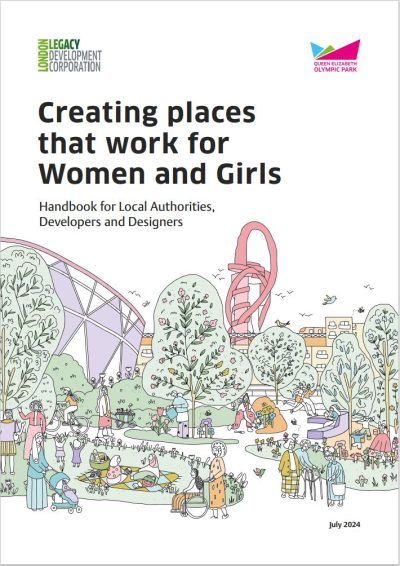
In 2021/22, the London Legacy Development Corporation (LLDC) conducted evidence-based research revealing a stark inequity in how cities are designed for women, highlighting the challenges women and girls face when navigating public spaces. In response, the LLDC committed to driving positive change, recognising that spaces designed with women and girls in mind ultimately lead to more sustainable and accessible environments for everyone. To further this mission, LLDC, in collaboration with consultants Arup, developed the handbook ‘Creating Places that Work for Women and Girls’, launched in the summer of 2024.
Learning Through Engagement
The handbook was developed through engagement with women and girls from LLDC’s East London communities, where it became clear that incorporating their voices is crucial to understanding their lived experiences, priorities, and needs. The handbook addresses key concerns women and girls face daily in urban environments, such as how they navigate spaces at different times of the day or year, influenced by factors like darkness, weather, and local events. Unlike straightforward A-to-B journeys, women often make multiple trips due to caregiving responsibilities or errands. Additionally, the busyness of an area and visibility in less-overlooked spaces greatly affect their sense of safety, often forcing them to take longer indirect routes, resulting in “time poverty”.
At the heart of the handbook is the recognition of the power of listening. It emphasises participatory-led engagement with women and girls from local communities, using practical tools such as site walks, co-clienting, co-design processes, and collaborative production methods. By working closely with the community, projects are contextually responsive, fostering gender-informed design and driving innovation across disciplines — from architects and landscape architects to engineers and highways teams.
Process-Driven Structure
The handbook outlines gender-informed processes and tools that can be integrated into organisations and projects. It provides essential resources for local authorities, developers, and design teams, ensuring gender-informed considerations are embedded from project inception through to post-occupancy evaluations. It also features case studies, offering inspiration and insights into the real-world impact of these practices.
The handbook is organised into three parts:
Part 1: Setting the Scene – provides an overview of the topic and its relevance today, presenting evidence on the most common barriers women and girls face in public spaces. It offers a narrative on gender-informed spaces, explores the policy context, and outlines key aims for creating more equitable environments.
Part 2: Mainstreaming Gender-Informed Processes – outlines the key players and tools required to integrate gender-informed processes at every stage of a project. It highlights the importance of participatory-led engagement, placing the community at the heart of planning and development. For local authorities, it covers corporate functions, setting up a project board, and leveraging the planning function as a tool. For developers, it explores how to approach projects through the RIBA work stages and use design to translate insights from participatory engagement into tangible outcomes.
Part 3: Playbook of Interventions – presents ten key practical interventions for design and engagement, focusing on built environment conditions and design considerations. It also includes essential questions to ask yourself, project teams, and engagement participants.
Lighting as an Example
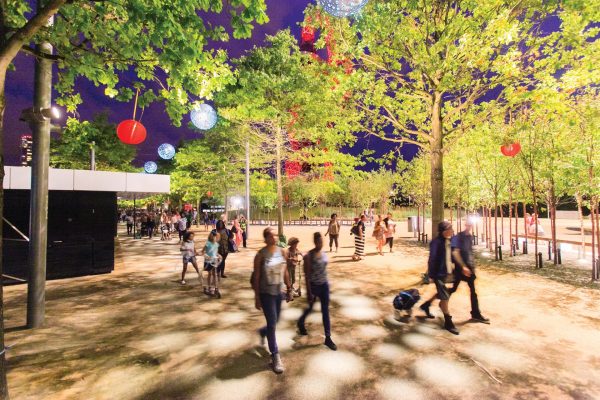
Singling out the first intervention — lighting — the handbook asks us to think beyond brightness and LUX levels. While adding more lights might seem like an obvious solution for improving safety, it’s not always that straightforward. Creating truly safe environments requires us to think about how lighting affects our perception of space. It’s not just about visibility; it’s about how lighting influences our interpretation of a space. The depth of perception, the experience of approaching an area, and the emotional responses that lighting evokes all play crucial roles. Poorly designed lighting can create deep shadows, obscure important details, or even make spaces feel more intimidating.
To foster safe and welcoming places for women and girls, lighting must be continuous, balanced, and thoughtfully integrated with the natural surroundings. Effective lighting design doesn’t just illuminate — it transforms public spaces into inviting, vibrant areas that feel secure and welcoming at any hour. In the end, proper lighting is about more than just brightness. It’s about crafting environments where people feel comfortable, confident, and connected — day or night. By looking beyond the basics and embracing a holistic approach to lighting, we can create public spaces that are not only safe but also alive with possibility.
Call to Action
I encourage everyone to consider the experiences of women and girls in your projects and explore where you can begin or expand efforts to address their challenges. We must start from a position of listening and prioritising the voices of community stakeholders when setting project visions, developing briefs, and during design development. The handbook makes it clear: we must work collaboratively in our roles to drive much-needed change for marginalised groups and strive toward an inclusive, equitable future. Use the processes and tools outlined in the handbook, improve upon them, and amplify the work you’re doing!

Connect with Kuljeet on LinkedIn.