


Published
This is the conundrum for most organisations: since tacit knowledge sharing – the people bit – is naturally messy and unstructured, it doesn’t lend itself to neat planning and control, can be inconsistent and take you in directions you had not anticipated. However, if you embrace this idea, then it opens up so many opportunities:
 Using knowledge brokers to curate, collate and share your documents massively increases the chance of information becoming knowledge, becoming new behaviour.
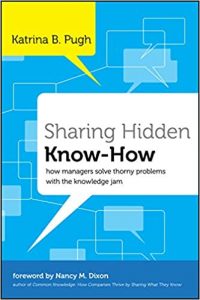
Organisations like documents. They allow you to present information in a way that is approved (in terms of the level and detail of what is shared), safe (in terms of assuring no commercial confidentialities are breached) and polished. The downsides to documents are (a) their findability, (b) their currency and (c) the effort required to assimilate what they are trying to convey.Using knowledge brokers, individuals within the organisation(1) is a great way to overcome each of these constraints. Knowledge brokers understand both the knowledge you are trying to share and the context and capability of those who require the knowledge. This means that they can identify who needs the knowledge and share the document with them directly, at the same time providing information on the context, an opportunity for feedback and a chance to coach the recipient on what they might do as a result of the information they have received.
Having the essence of reports conveyed to us through the eyes and mouth of someone we respect is an immediately engaging activity, not least because they bring their personality and their own values and judgement into play. Check out the Association’s Lessons from our Archive interviews if you want to see this ‘humanizing of information’ in action.
 Tacit knowledge sharing processes actively grow your knowledge.
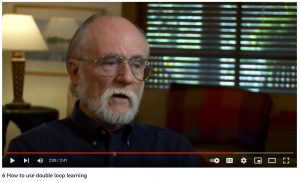
The processes for tacit knowledge sharing, whether it is as simple as a two-way conversation or more sophisticated through something like a peer assist session or hot seat Q&A, is two-way. The person who is sharing the knowledge will often gain new knowledge and insight, alongside the person or people on the receiving end. This could be as simple as needing to respond to a question that you hadn’t anticipated, and which gives you entirely new way of looking at what you know.In instances where two or more people are spit balling ideas to identify a solution to a problem or to plan the best approach to a particular challenge, the interaction between you can enable you to build on what each of you know to reach a new level of understanding. Check out this great video on Single and Double Loop Learning and you’ll get a sense of how tacit sharing can grow your knowledge.
 Social learning, which is an aspect of tacit knowledge sharing is a great way for dealing with uncertainty, unknown knowns, and unknown unknowns.
David Gurteen is a keen advocate of the idea of randomised coffee trials; the process of inviting two individuals from across an organisation or across a network to meet up for a chat (either virtually or in person). In the process of socialising, the two individuals can learn a great deal from listening to and watching each other: they might learn how an individual (or a whole department) views their project and maybe how the work on that project impacts the other person. They can break down siloes and gain a better understanding of other parts of the organisational machine within which they operate. The random nature of how people are paired up in the trial allows for serendipitous learning, as the individuals concerned discover connections they had never imagined.
 A focus on creating a learning and sharing culture (the Learning Organisation) pays dividends
Organisations wishing to share knowledge (rather than simply sharing documents) need only to focus on creating the opportunities for facilitating tacit knowledge sharing. Create the right culture and the individuals will solve the issue of what knowledge they need and where are they going to find it.
Which brings us back to the original conundrum. Knowledge sharing requires time, time for reflection, time for practice and time for assimilation. In today’s very busy work environments allowing and indeed creating time for conversation and, particularly for reflection, is always going to be challenging. However, it’s not insurmountable – time-boxing and defending a regular time (or ideally a couple of regular times) in everyone’s working week should not be beyond any organisation. These are then the times into which you can schedule facilitated knowledge sharing processes, some of which I have referenced, in passing, in this blog.
(1) Sharing Hidden Know-How: How Managers Solve Thorny Problems with the Knowledge Jam, Katrina Pugh, (Jossey-Bass/Wiley, April 2011)