


Published
When I joined the Major Projects Association in 2005 I was struck by how few women there were at our events and training courses. Back then having 2 women for every 8 men was considered typical and no one challenged it.
In that context, I began asking 3 key questions of people:
- Is my view of gender imbalance in major projects representative of the sector as a whole?
- If so, does it matter?
- And if it matters, what can we do about it?
I quickly established YES to the first 2 questions. The third proved more tricky to answer and prompted me to undertake a piece of research into understanding what comes between women and a career in major projects.
I ran workshops with men and women working in major projects at all levels of seniority and experience from Chief Executives to new starters. Across lots of different project types – oil and gas, infrastructure, change projects and up and down the supply chain – including clients, contractors and consultants. I also spoke to women who have not chosen to work in this field.
Through those workshops and the associated discussions, I noted almost 100 discrete reasons why women do not find their way into a role in major projects delivery.
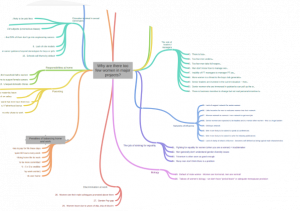
Whilst a number of the barriers are outside of the system of work – i.e. they can’t be influenced directly by people in the workplace. These would be issues such as the gender stereotyping within society which tells girls that their success in maths is due to hard work, whereas boys’ mathematical success is due to natural ability.
Many of them do exist within the system of the workplace. And I found that these multiple workplace barriers fell into a number of identifiable categories which include:
- Straightforward discrimination – illegal but it still happens
- Networks of influence – essentially men and women use their networks differently
- Leadership – leading by example / female role models
- How parenting and work intersect – “the workplace has used to the notion that women have babies; it needs to understand that so do men”
- Striving for equality – leading EDI efforts is often delegated to women – BAME women in particular – and that brings more responsibility than immediate benefits
All of the issues coming under these headings take place within the system of work and therefore it is within the power of leaders, managers, colleagues and individual women themselves to understand, challenge and remove them or sometimes just jump over them.
How to recognise and hurdle the barriers
Because today we are celebrating International Women’s Day I don’t want to talk doom and gloom about the many things that are outside of the control of individual women in the workplace. Rather I want to provide some insight for individual women which might help them to recognise and then jump over some of these barriers. Forgive the slightly naff mnemonic but I wanted to give you something SIMPLE!
Speak out
“I”
Money matters
Path to promotion – know what it is
Lift up others
Equality Moment
Make yourself seen

People who get promoted are those who are visible. Generally speaking, men are better than women at sharing their successes with the world. From childhood, girls who show off are considered precocious whilst boys who show off are indulged. So by the time we are adults in the workplace we shy away from celebrating our success. I am no different in this regard – it took me over a decade before I began introducing myself as a world champion powerlifter – although I have been one since 2006!
So if you want to be in line for the next opportunity you need to ensure that those doing the promoting know who you are. Offer to speak at industry events, write for publications that will be seen by senior leaders – put yourself out there. Don’t believe in the ‘Cinderella syndrome’ that ‘someday your prince will come’. As an ex-fundraiser my motto has always been, ‘if you don’t ask you won’t get’, so show your worth and ask for your next promotion.
And when you are in that promotion interview don’t forget to say “I”. Women are so often aware of sharing the glory that we will refer to: ‘our team success’. Which is great when you’re leading the team. But when the time comes for personal promotion you need to switch from ‘we’ to ‘me’. This isn’t being selfish. It’s learning to speak the same language as your interviewers. If you only refer to the successes of the team they will assume that you weren’t personally responsible – they won’t understand that you’re just being modest.
Don’t ever forget that money matters. What you are paid is a direct reflection of how you are valued. Find out what your male equivalents are paid and if they’re paid more or if they mysteriously make it up the career progression more quickly than you, ask your manager why this is. It has been proven that one of the most effective ways to improve gender balance in an organisation is through absolute transparency when it comes to the criteria for promotion.
Find out what those criteria are in the path to promotion and if they aren’t clear, ask your line manager or HR to be more explicit. Let your manager know that when you fulfil all the criteria, you will be seeking promotion.
As women in a minority in a workplace it’s easy to feel that we are competing for the same few ‘token women’ opportunities. That may well have been the case a decade or so ago. I believe that one of the cruellest tricks that the patriarchy has played on us is to pitch woman against woman such that many of us don’t feel much sisterly solidarity. This is particularly true of women who have been in a minority with men for most of their careers. But this women vs women competition does us no favours. So instead try to lift each other up.
If another woman shares a good idea in a meeting – speak up in favour of it or repeat it to ensure that everyone hears and understands where the idea came from. Female staffers in Obama’s White House team adopted a meeting strategy they called ‘amplification’: When a woman made a key point, other women would repeat it, giving credit to its author. This forced the men in the room to recognize the contribution — and denied them the chance to claim the idea as their own.
Finally – here is one small thing that you can all do today. In the major projects sector, we are all used to having a Safety Moment at the start of meetings. I would like you to add an Equality Moment to the beginning of that meeting agenda as well. Before you start your discussions ask yourself if the meeting is sufficiently diverse to ensure that you will make good decisions. This single question will help everyone in the room to consider their biases and take the link between team diversity and project success seriously.
Manon Bradley, Major Projects Association Development Director
and World Champion Powerlifter since 2006.