


Published
40 Years of Reports on Major Projects and their Management
2021 is the Association’s 40th Anniversary and, as part of the celebrations, we are spending time revisiting our extraordinary archive of detailed reports that stretch all the way back to our first meeting in 1981.
Part of this project is the Lessons from our Archive series of interviews with current members, each of whom is invited to pick up a report from the last 40 years and offer their perspective on what they read through the eyes of 2021. Nick Smallwood kicked off this activity with some wonderfully insightful and heartfelt commentary on the report we generated looking at the Jubilee Line Extension project, right on the cusp of the new century.
We’ll also be using the archive as a source of inspiration for members attending our 2021 annual conference in September.
And this is the first of four blog posts aimed at capturing something of the essence of each decades worth of reports.
What was the focus of our interest in the 1980’s?
Reviewing the title of the reports and the language of the contents list, we can get a sense of how major projects were seen, two generations ago.
The most pervasive risk and sometimes the biggest risk is the risk of misunderstanding and being misunderstood. Unresolved Problems of Risk (1982)
Unsurprisingly, the language that is used is very largely that of engineering, project finance, strategic risk, international economics and politics. Mark Winter and Tony Szczepanek’s great 2009 book Images of Projects, posits seven core images – essentially perspectives by which to understand and assess modern projects:
 Image 1: Projects as social processes
Image 2. Projects as political processes
Image 3: Projects as intervention processes
Image 4: Projects as value creation processes
Image 5: Projects as development processes
Image 6: Projects as temporary organizations
Image 7: Projects as change processes
And using those lenses, we can see the first decade of reports (1981 to 1991) predominantly focus on the political – and interestingly given today’s Association, which is concerned predominantly with UK based projects – the early reports describe the politics of projects in countries from right across the world: Australia, South America, Asia and the European continent; this last a reflection of the growing importance of European collaboration ten years after the UK’s accession to the European Community.
A common problem concerns the provision of proper critical supervision during construction of major projects overseas. Expatriates are expensive and some of them are not too well disposed to working most of the day in a hot and sultry environment. Catastrophe Risks (1983)
There is also plenty of insight on image 5: development, with reports on projects from infrastructure, power generation and supply, oil and gas, mining, defence, transport, waste management and the environment, and information technology. In the main, the reports concentrate on the planning, initiation and delivery phases of these projects, so there is very little if any reference to the whole life of a major project or the project lifecycle, which occupies so much of our thinking today.
And although there are two fascinating reports, one on Hazardous Waste (1990) and one on Cleaning Up the Mediterranean (1991), concerns for the environment are largely limited to these two reports; and the way they frame the subject is substantially different to today’s view.
There is one report dedicated to the social processes of projects, The People Factor Managing Major Projects (1986) but beyond this specific report, the complexity of human relations is notably absent in the majority of the other reports during the period.
Whilst there is some reference to value in the reports, this is expressed exclusively in terms of revenue and return on investment.
The language of of project management
There is little evidence of those terms of art that litter modern project management, aside from the very traditional terms relating to risk, planning and control or that come to us from existing areas of management, such as negotiation. And the organizational roles we associate with modern project management are few and far between. There are references to ‘the project directorate’ and the ‘sponsor’ role comes up several times but clearly none of the modern governance structures or concepts such as stage gates, PMOs or Project Boards.
The trouble is the philosophy of ‘define and quantify’ … is still very much with us. I would suggest it be replaced by ‘describe and interrogate’ or ‘inquire’. Political Risk in Major Projects (1985)
A record of some archetypal major projects
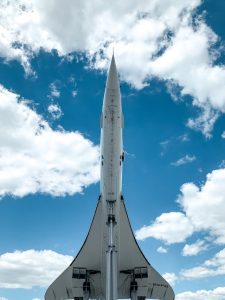 Between 1981 and 1991, the archive contains reports featuring (amongst other projects):
- the Channel Tunnel
- Hong Kong Mass Transit Railway
- Sydney Harbour Tunnel
- the North Sea Oil Argylle Field
- Concorde
- the Thames Barrier
- the Docklands Light Railway
- the Advanced Passenger Train
- London Docklands Redevelopment
- the Ariane Project
- the London Stock Exchange Big Bang
- the Tornado Multirole Aircraft
- the Mediterranean Action Plan
- the Heathrow Express
all decade-defining projects that set the agenda for the UK in the subsequent 30 years and dramatically advanced our understanding of major projects and their management.
I can’t wait to see what the next decade of reports may have to offer.