


https://commons.wikimedia.org/wiki/File:Plutchik-wheel.svg

The present
We are always navigating holes…
Change is something that many people don’t appreciate. A few weeks ago, there was a sudden change. For many we were told to “stay home starting tomorrow”. For some, that means working from home, for others it means losing a job and struggling with day to day expenses and for some it means juggling work from home, schooling the kids, making additional meals, buying groceries with less access to stores. And then of course there are many people who despite the stay at home orders, are still having to go out to work. Maybe to work on the food supply chain, or as a frontline worker in the healthcare field. The change has been dramatic, and we have had no choice but to adjust the best we can.
In recent group coaching sessions, we often hear that people are “not experiencing anything different than usual”. They regularly or habitually work from home. It is “just the same”. When we pause and think about the truth of that statement, we are often surprised, and it turns out that the only thing that seems the same is the idea of working from home. For example, that when one person said “nothing has changed for me, I always work from home. We asked, how is it different? Using perspective, honesty, (self-)kindness and fairness, she paused, reflected and answered:
- I am cooking three times a day
- There are five people in the house all day every day
- I have to fit in homeschooling three kids
- There are five people trying to use three computers
- The broadband cannot support me working and two kids on their school page.
- We are not able to see our extended family.
She suddenly looked sad and relieved. She was sad that there were so many things that had changed, and relieved because she admitted she had been feeling tired and a little down and had been criticizing herself when things were so “normal” for her.
Maria Sirois (Author of “A short course in happiness after loss”) says “pain, is pain, is pain”. Humans don’t experience pain in comparison to others. They experience their own pain and it is not less – or more – because of how it compares to others. It just is. Having just been in a four- hour mindfulness retreat and I am reminded to think about this present and ask these questions. Curiosity, self-leadership, self-regulation, self-forgiveness, hope, prudence and even a little humor help me to appraise:
- What is constant in this present moment?
- What has changed?
- What am I happy with in this moment?
- Who do I choose to be in the presence of this?
- What is one thing I can do for myself in this moment that will help me feel 2% more
- Optimistic
- Healthy
- Happy
- Relaxed?
What is one thing you are doing now that you will continue to do? _________________________________________________________________________For me the answer is, “treat self-case as a necessity rather than a luxury!”
The Future
Like holes before this one, we will find our way out
One significant job of a project manager is to collect, challenge and collate project predictions. Our experts predict how long each part of a project will take and what the optimal sequence is, and we put it together to form the plan. So often the plan is not what is ultimately executed and to some degree serves more as a benchmark (baseline) against which to measure the deviation from what we expected. This has never been truer than now.
As the world tentatively reopens, there is even more uncertainty than when it shut down. A few weeks ago, others made the decisions and we lived with – and adjusted to – those decisions as best we could. Our choice was not “what to do” it was “how to do it”. Some of us adjusted more easily than others. Some did not really adjust at all and now suddenly we will be asked to adjust again.
In the future though we will be making the decisions. We may be told it is OK to go back to work, but we will decide if that is safe – for us, for our children who may not be in school – for vulnerable loved ones. We will decide whether going to a restaurant, store, gym or sports venue is “safe enough”.
Our days will be a maze of decisions, and we will be called upon to use our strengths in new ways and to use strengths that come less easily to us in order to get through the next few months.
We are already seeing that everyone is being called upon to use more Prudence than normal. This character strength – the planning strength – is one that we are more likely to be adept with. We may have to lean more on Perspective – yes a choice may feel unsafe, but it may be less dangerous than the alternative (not going back to work and not being able to pay the rent for example).
We will need Hope – that is the strength of positive forward thinking AND taking action.
Forgiveness may be needed more now as people make decisions that turn out to be less than optimal, or tempers fray, or energy is lower. In fact, when we look at the twenty-four research- based character strengths (see below), EVERY one of them has a place in what is coming in this future.
Look at the list and think about which of the strengths come most easily and naturally to you and then make a plan for how to engage those strengths purposefully in the future. These questions may help:
- What are two or three character strengths that you feel you can generally rely on?
- How do those strengths support you in making wise decisions, and practicing self-care?
- How can you use those strengths to make things 2% better for the people around you?
- What strengths do you see in the people around you that will complement yours and can be used to make things 2% better.
- And focus on self-kindness. Kindness is one of the Humanity strengths. How can you be kind to yourself at least once a day so that you can then be kind to others?
What is one practice you want to adopt going forward to help make each day 2% better? _______________________________________________________________________
For me, that will be create a space in each day for peace, contemplation and compassion to the world – I may take up a Metta practice!
Take what you learned in the past, are learning in the present and launch into the future with a curious mind. In mindfulness we call this “beginner’s mind”. In the next few months we will all be beginners. Embrace it, take care of yourself, and see what you learn!
And, remember to put on your own oxygen mask first!
Haven’t taken your free VIA Character Strengths assessment yet to discover your strengths? It takes 15 minutes and you can take it for free using this link: http://projectmotivator.pro.viasurvey.org
Share the link with others and start discussing what your strengths are and what theirs are and how to use them together to create synergy!
For a great little book to read during these times of uncertainty – to understand how we process change – read Carole Osterweil’s book Project Delivery, Uncertainty and Neuroscience: A Leader’s Guide to Walking in Fog.
https://www.amazon.com/Project-Delivery-Uncertainty-Neuroscience-Leaders/dp/1916021018/
We ran a Zoom live with Ruth on 22nd July 2020 to explore character strengths. You may watch the recording if you weren’t able to catch the event live:
Read Ruth’s first blog in this series about personal character strengths
Read Ruth’s second blog in the series on team strengths
Read Ruth’s third blog in the series on goal setting
Read Ruth’s fourth blog about navigating change with strengths
Read Ruth’s fifth blog on character strengths in adversity
Ruth Pearce
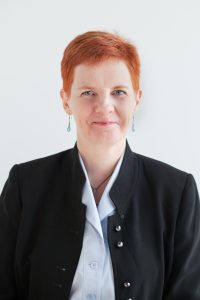 Ruth fem. proper name, biblical ancestor of David, from Hebrew Ruth, probably a contraction of reuth” companion, friend, fellow woman.”
Ruth (N) “sorrow for the misery of another; repentance, regret,” c. 1200, ruthe, from Old Norse hryggð “ruth, sorrow,” from hryggr “sorrowful, grieved”. Or else formed in English from reuwen “to rue” on the model of true/truth, etc.
Ruth is passionate about the future of those who lead projects as influencers, and forces for positive change in organizations and teams. Her purpose is to build engaged teams who will run through walls for each other, led by an impassioned, empathic, socially intelligent project or program leader.
Connect with Ruth via her website, via Twitter @ProjMotivator or via Linkedin